UW PacTrans Workforce Development Institute · August 2026
This August, the Workforce Development Institute and the NW Tribal Technical Assistance Program partnered with Fehr & Peers to deliver a five-day training for Tribal transportation staff, pairing hands-on GIS instruction with practical Road Safety Audit training. The course was designed to close a persistent gap: many Tribes manage miles of roadway with limited in-house mapping capacity, which makes it harder to meet federal reporting requirements and to identify safety risks on their own roads before they become dangerous.
During the first three days participants grew their GIS skills from the ground up in ArcGIS Pro, starting with the basics and moving through data management, spatial analysis, and finally cartography and map design. By the end, students could represent a map properly in a layout, with legends, scale bars, and symbology, and practiced building a strip map that meets Bureau of Indian Affairs and National Tribal Transportation Facility Inventory standards. That strip map is the exact deliverable Tribes need to report their roads and secure transportation funding, so participants left with a skill they can put to work right away.
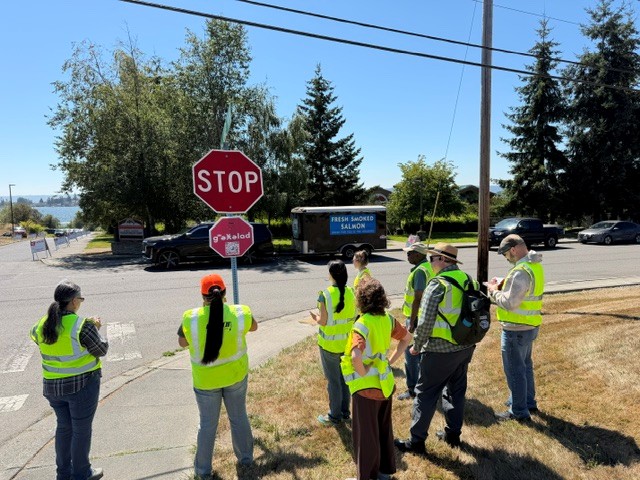
The final two days shifted to Road Safety Audits, grounded in Federal Highway Administration guidance and the Safe System Approach. After a classroom foundation in the methodology, students conducted a real walk audit along Totem Beach Road in Tulalip and closed the week with a mock audit that included field review, team analysis, and a findings presentation on nearby road segments.
The goal was for participants to leave with tools they can use immediately: the ability to produce compliant strip maps that support federal funding applications, and the confidence to identify and document safety concerns on their own road networks. Longer term, the hope is that this work translates into stronger, more self-sufficient Tribal transportation programs, and safer roads for the communities that depend on them.